Upcoming Event: Center for Autonomy Seminar
Learning for Autonomy: Trust Modeling in Human-Robot Collaboration and Distributional Multi-Agent Reinforcement Learning
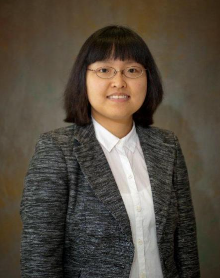
Yue Wang, PhD, Professor, Warren H. Owen – Duke Energy Professor of Engineering - Associate Dean for Research, School of Mechanical and Automotive Engineering College of Engineering and Applied Science (CECAS) Clemson University
11 – 12:30PM
Thursday Feb 12, 2026
POB 4.304
Abstract
Robots and autonomous systems are becoming an essential component that empowers economic and human possibility, with the potential to transform the future of work and daily life. This seminar will begin with an overview of research at the Interdisciplinary & Intelligent Research (I2R) Lab at Clemson University focused on human–robot interaction and autonomy. The human-robot collaboration integrates the best part of human intelligence with the advantages of robotic systems. Effective human–robot collaboration requires not only high performance, but also trust—an essential factor influencing safety, reliability, and user acceptance. We discuss computational models for human trust in robots, how trust can be quantified and learned, and how it can be incorporated into robot decision-making, motion planning, and control to achieve safer and more reliable autonomy with higher user acceptance. Building on these models, the talk highlights learning-based approaches that enable robots to reason under uncertainty and adapt to human preferences and behaviors. We consider reinforcement learning (RL) formulations in which key quantities, such as value functions, are represented probabilistically rather than as point estimates. We present learning strategies that operate over these distributions and improve policy optimization by reducing variance in advantage estimation while maintaining controlled bias. These methods enable more stable and data-efficient learning in safety-critical human–robot interaction scenarios. We then address collaborative settings involving multiple robots interacting with humans. We discuss limitations of centralized training paradigms and introduce fully distributed multi-agent reinforcement learning frameworks that rely on local observations and peer-to-peer communication. By enabling agents to infer global context through structured information exchange, these approaches support scalable, robust collaboration without reliance on centralized critics or privileged global information.
Biography
Dr. Yue Wang is the Warren H. Owen-Duke Energy Professor of Engineering and the Director of the Interdisciplinary and Intelligent Research (I2R) laboratory at the School of Mechanical and Automotive Engineering at Clemson University. She is also the Associate Dean of Research at the College of Engineering and Applied Science (CECAS) at Clemson. Dr. Wang received a Ph.D. degree in Mechanical Engineering from Worcester Polytechnic Institute in 2011 and held a postdoctoral position in Electrical Engineering at the University of Notre Dame from 2011 to 2012. She became an Assistant Professor at Clemson University in 2012, was promoted to Associate Professor in 2018, and then early promoted to Full Professor in 2022. In 2023-2025, she served as a Program Director at the National Science Foundation (NSF). In this role, her primary responsibilities included managing the Dynamics, Controls, and Systems Diagnostics (DCSD) program and the Foundational Research in Robotics (FRR) program within the Directorate for Engineering’s Division of Civil, Mechanical, and Manufacturing Innovation (CMMI). Dr. Wang’s research interests are human-robot interaction systems, multi-robot systems, and cyber-physical systems. Her research contributions include trust-based control for human- robot collaboration systems, collaborative robotics for manufacturing, multi-robot symbolic motion planning, and human-aware control, learning, and verification for autonomous systems. She has authored over 100 peer-reviewed research papers (including 2 best paper awards and one top-cited paper from IEEE and ASME) and secured over $10 million in research funding. Dr. Wang has received the Air Force Office of Scientific Research Young Investigator Program (AFOSR-YIP) award, the National Science Foundation (NSF) CAREER award, and the Air Force Summer Faculty Fellowship. Her research has been supported by NSF, AFOSR, AFRL, ARO, ARC, NASA, US Army, and industry. She has served as Chair of the IEEE Control System Society (CSS) Technical Committee on Manufacturing Automation and Robotic Control. Dr. Wang is a Fellow of ASME and a Senior Member of IEEE. She is currently an Associate Editor for the IFAC Annual Reviews in Control, the ASME Journal of Autonomous Vehicles and Systems (JAVS), the IEEE Open Journal of Control Systems (OJ-CSYS), and the IEEE CSS conference editorial board. She has also served as an Associate Editor of the IEEE Robotics and Automation Magazine (RAM), a Technical Editor of the IEEE/ASME Transactions on Mechatronics (TMECH), and a Guest Editor for various special issues in international journals. Dr. Wang is a recipient of the George N. Saridis Best Transactions Paper Award, the IEEE International Conference on Automation Science and Engineering (CASE) Best Student Paper Award, and Clemson University Mechanical Engineering Eastman Chemical Award for Excellence (both junior and senior faculty awards). Her work has been featured in NSF Science360, ASEE First Bell, State News, SC EPSCoR/IDeA Research Focus, and Clemson University News.
Event information
Thursday Feb 12, 2026